Drylining is a modern construction method used to finish internal walls and ceilings without traditional wet plastering.
It involves attaching plasterboard to surfaces like brick or blockwork, or to metal and timber frames.
This technique provides a smooth, clean surface that is ready for decoration quickly and efficiently.
One of the main advantages of drylining is its speed. It requires no drying time, unlike traditional plaster,
which helps projects stay on schedule and reduces labour costs. Drylining also creates less mess and allows for
quicker occupancy in both residential and commercial buildings.
In addition to faster installation, drylining improves a building's insulation and acoustic performance.
Boards can be fitted with thermal or soundproofing materials to meet energy efficiency or sound control requirements.
It's also commonly used to conceal wiring, pipework, or uneven surfaces without compromising access or functionality.
Common drylining methods include the dot and dab technique where boards are glued directly to a wall using adhesive
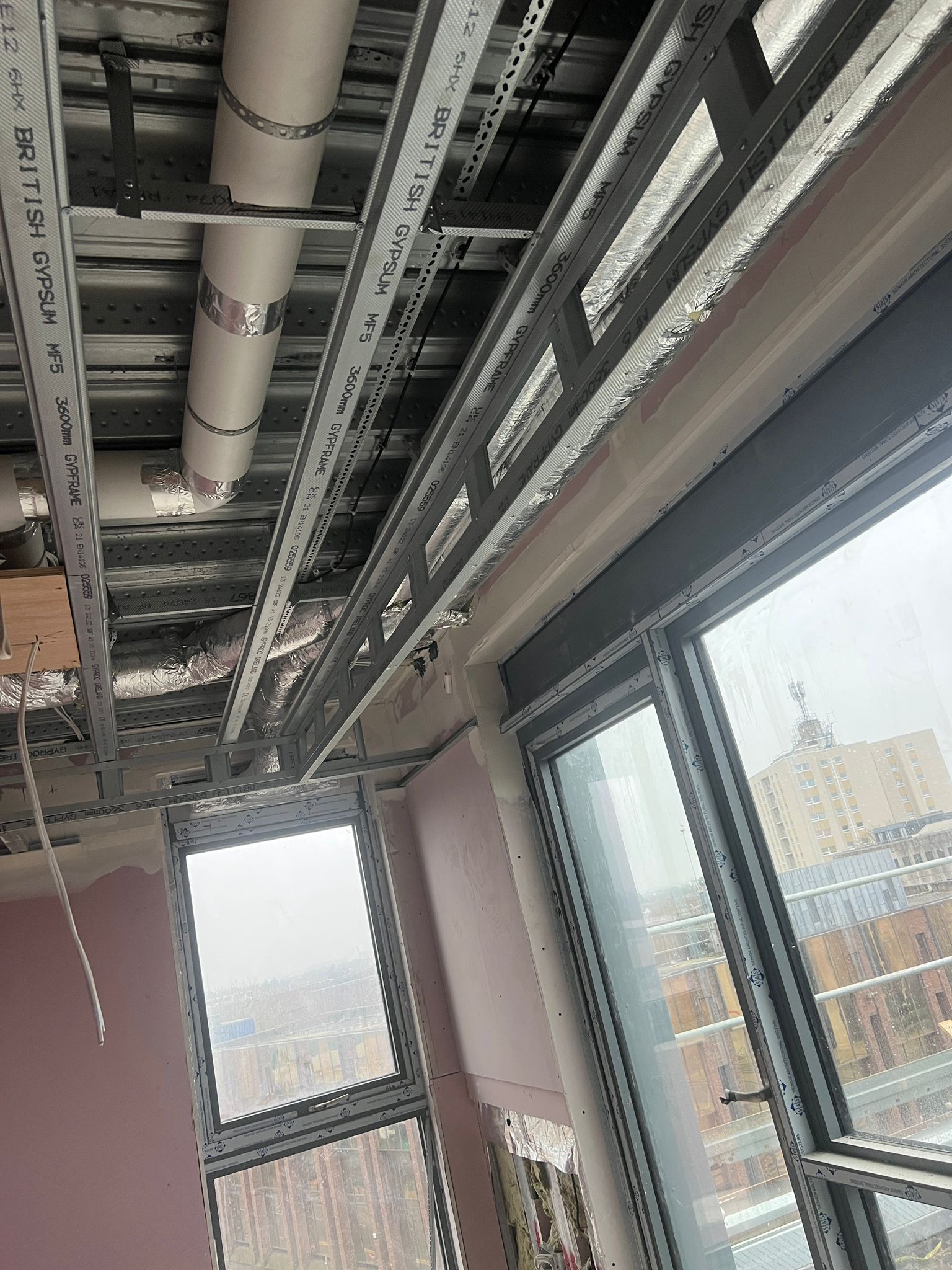
and metal stud partitioning, ideal for creating new internal spaces. Ceiling systems such as suspended or MF ceilings
are also popular options in modern drylining projects. Whether you're undertaking a new build, renovation, or commercial fit out, drylining offers a clean, fast,
and practical solution for internal finishing. With the right team and materials, the results are both professional and durable.
Drylining Projects Gallery
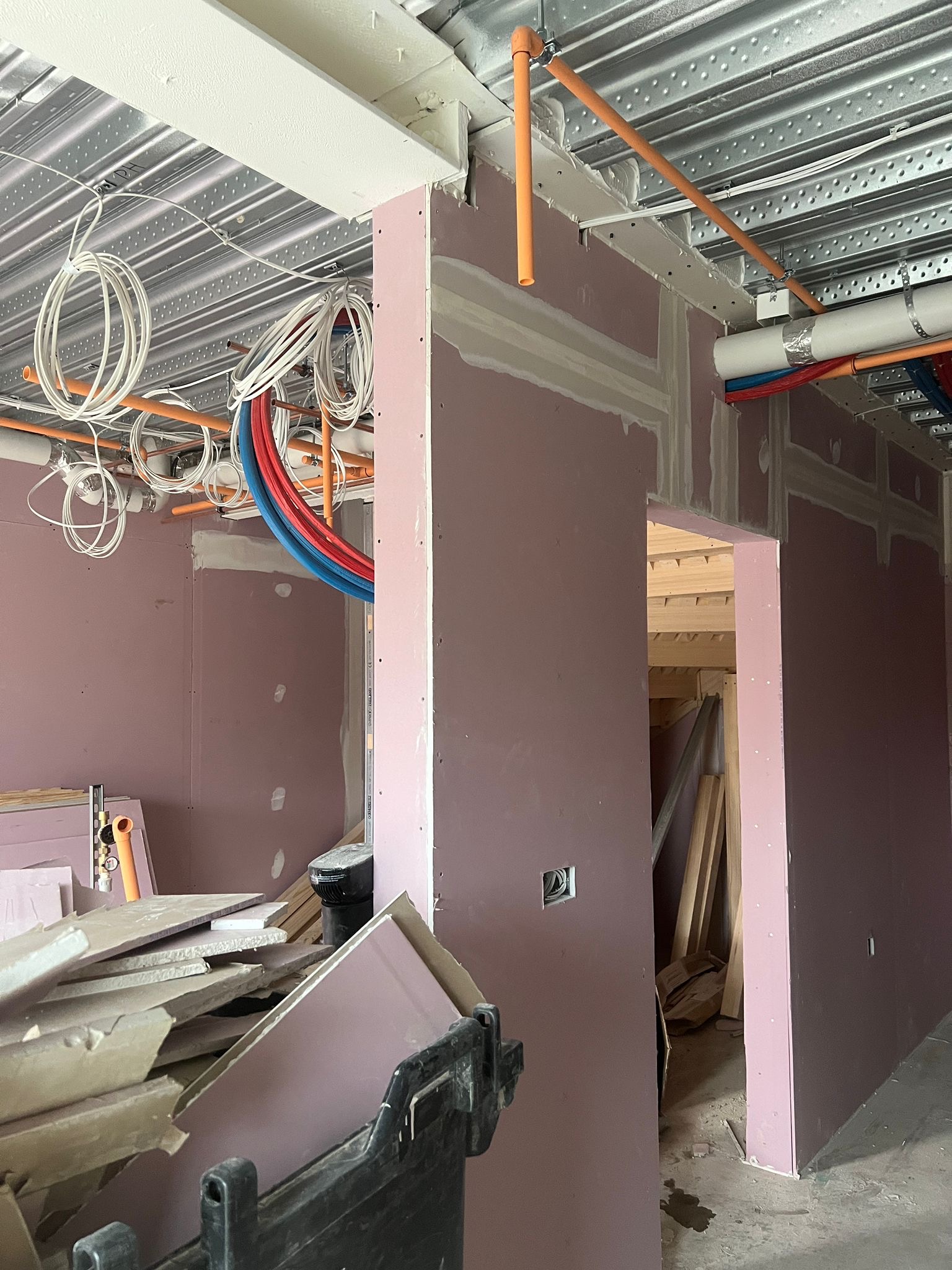
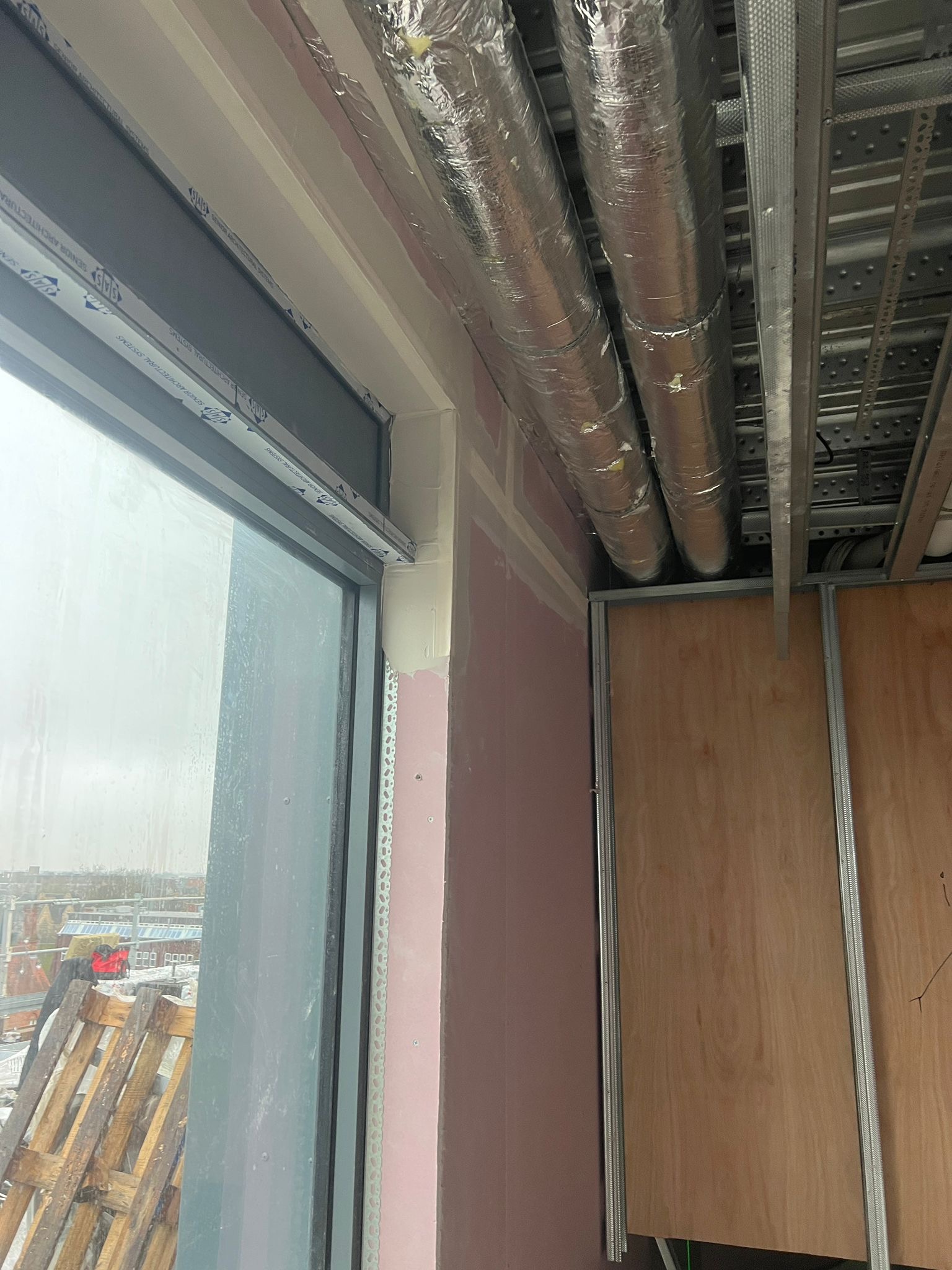
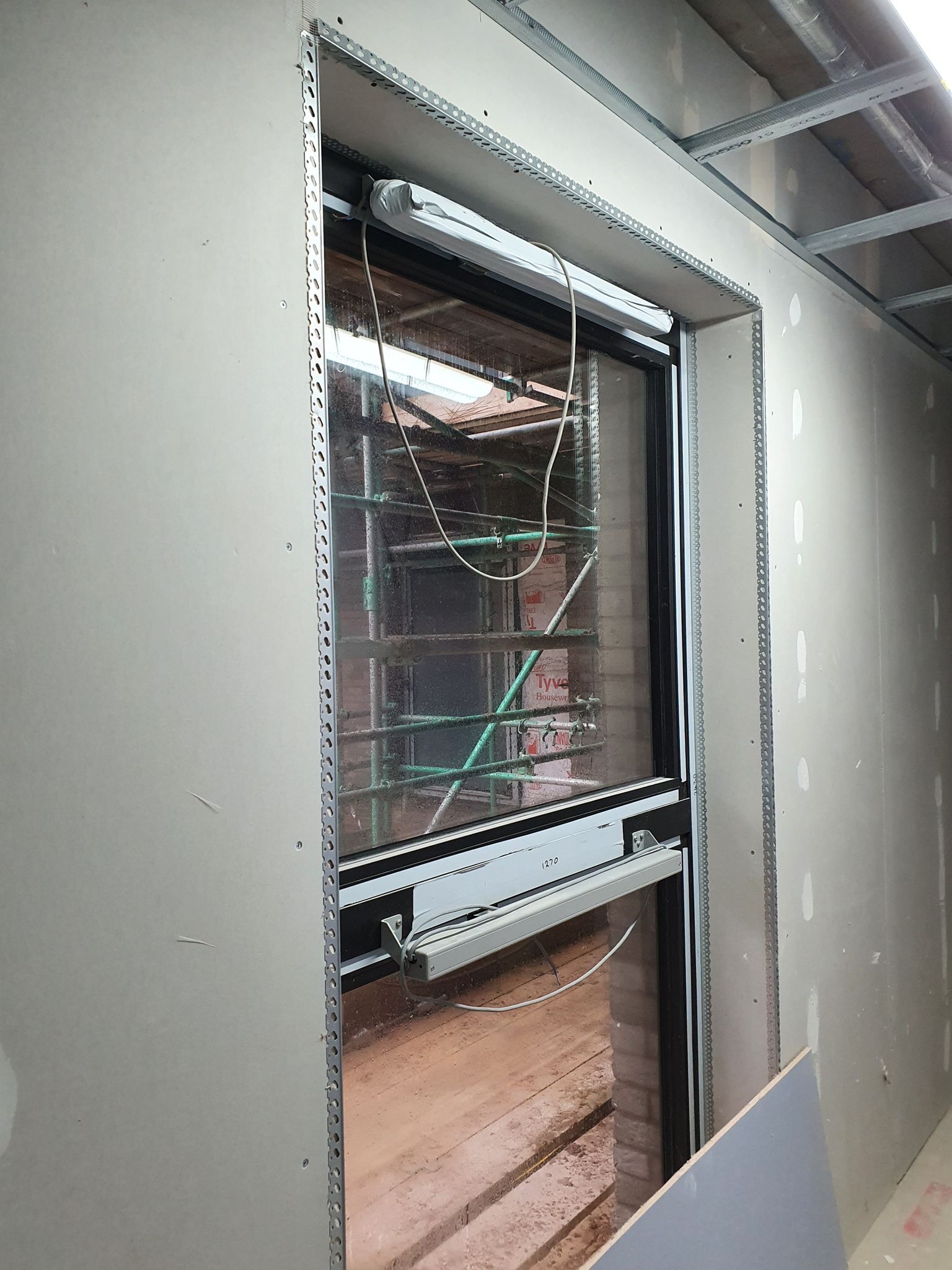
Drylining installation in progressFinished drylined wallCommercial ceiling dryliningMetal stud partition